Never received professional training
The remaining sample reported learning now (8%), occasional or limited training (14%), or previous training (16%).
A real-time badminton training system combining motion detection, pressure sensing and interactive gameplay.
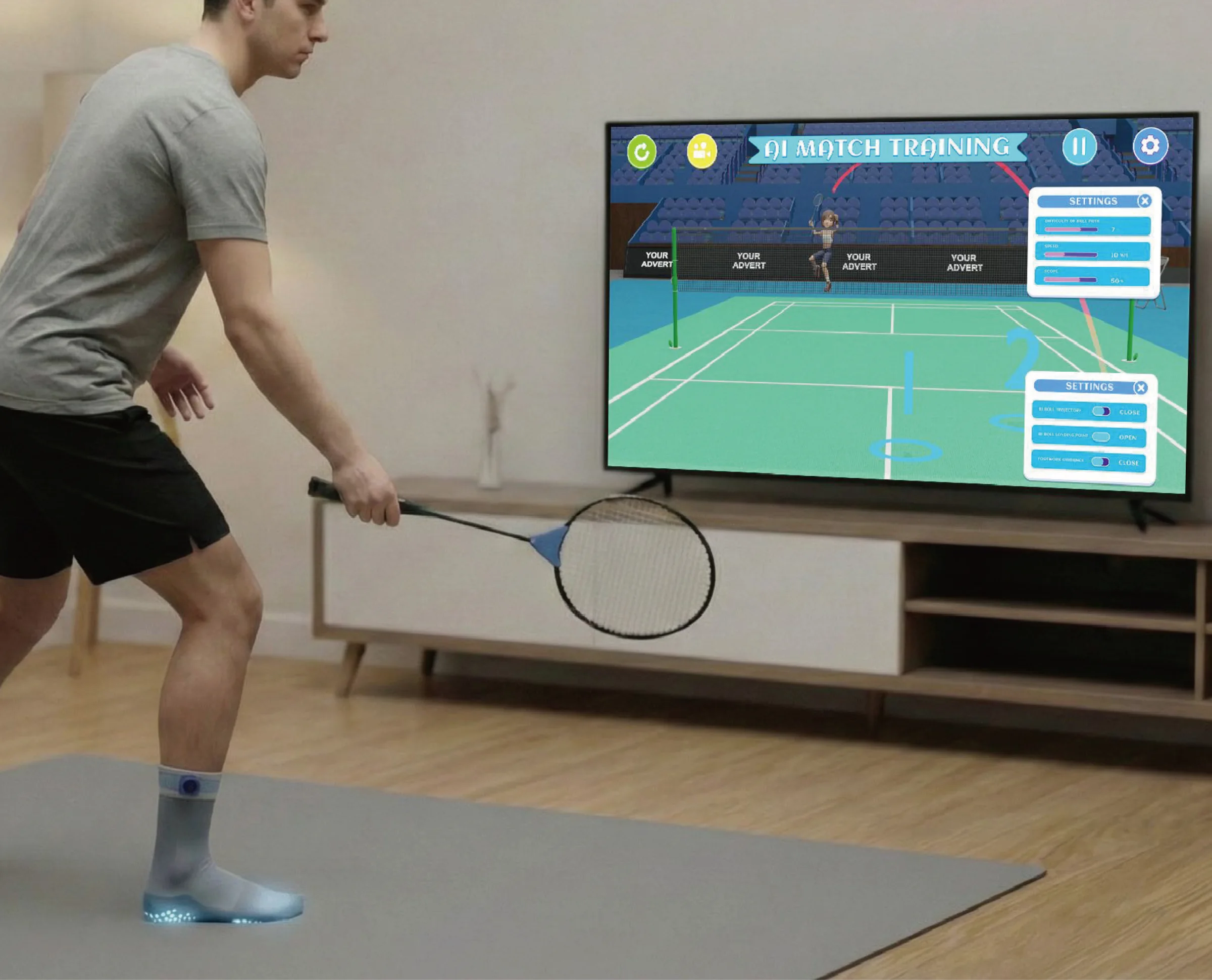
Product definition, user research, interaction design and system prototyping across pose scoring, motion sensing, plantar pressure and Unity.
Beginner evaluation validated the training experience, indicating a substantial improvement in onboarding speed, understanding of foundational movements and early technique development.
TARGET USERS
Amateur players lack affordable, immediate feedback on posture, footwork and movement errors.
Players cannot see their own movement errors in real time.
Feedback must be immediate.
Real-time posture scoring.
One-to-one coaching is expensive and difficult to access.
Training should work independently at home.
Self-guided training mode.
Technical terminology is difficult for beginners.
Feedback must be visually direct.
On-body visual cues.
Repetition reduces motivation.
Show short-term progress and rewards.
Game-based training loop.
QUANTITATIVE STUDY
The survey identifies where access and injury concerns concentrate. Interviews explain why immediate, low-friction guidance matters.
The remaining sample reported learning now (8%), occasional or limited training (14%), or previous training (16%).
Sprains accounted for 39.44% and strains for 29.08% in the supplied survey results.
The result reinforced the need to connect technique feedback with injury-aware movement guidance.
QUALITATIVE INTERVIEWS · N=3
 01
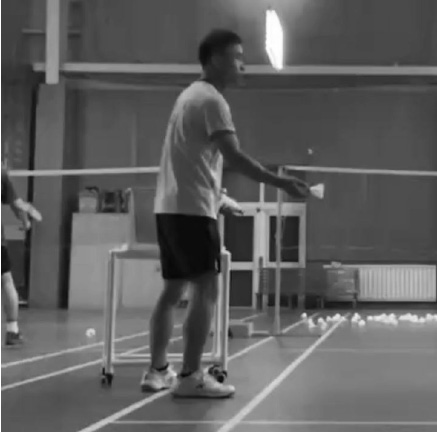
01“Professional guidance/standardized action teaching is very necessary to prevent injuries and improve skills. The best time is when they first start playing badminton, because at this time they have not formed muscle memory of wrong actions.”
Prioritize beginner onboarding and correct high-risk movement patterns before poor habits become automatic.
 02
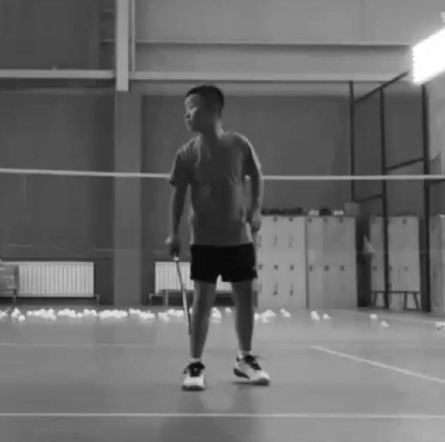
02“Professional guidance is very helpful to me. Through learning, I gradually surpassed many people who were at my level or even better than me. At the same time, I feel that the burden on my body has decreased.”
Make progress visible while treating reduced physical burden as an important user outcome.
 03
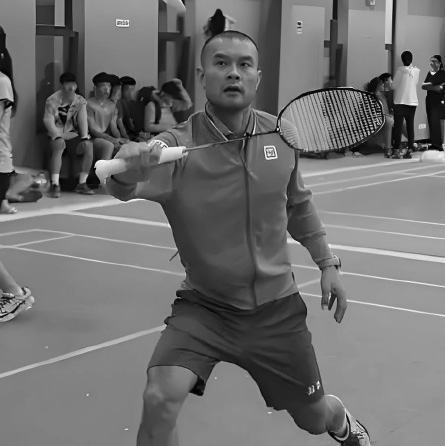
03“After multiple injuries, I realized the importance of receiving guidance. However, due to the workload, I do not have time for systematic training. I only occasionally find some teaching videos for practice, but there is no feedback or correction, so the effect is not significant.”
Deliver short, self-guided sessions with immediate correction instead of passive instructional content.
Directional evidence from a self-selected convenience sample recruited through WeChat groups for badminton enthusiasts. Findings should not be generalized to all amateur players.
SYSTEM ARCHITECTURE
A laptop or USB camera captures body landmarks through Python and MediaPipe.
BUILT & TESTEDRelative joint positions are compared with an overhead-ready reference pose to return a 0–10 score.
BUILT & TESTEDESP32 processes MPU6050 acceleration and rotation signals into approximate movement trajectories.
BUILT & TESTEDA pressure-sensing insole maps live readings into visual pressure zones.
BUILT & TESTEDUnity Barracuda maps body-motion input onto a 3D avatar for visible movement feedback.
BUILT & TESTEDCamera, IMU, pressure and Unity modules can be synchronized into one continuous product flow.
INTEGRATION READYWORKED EXAMPLE · OVERHEAD-READY POSE
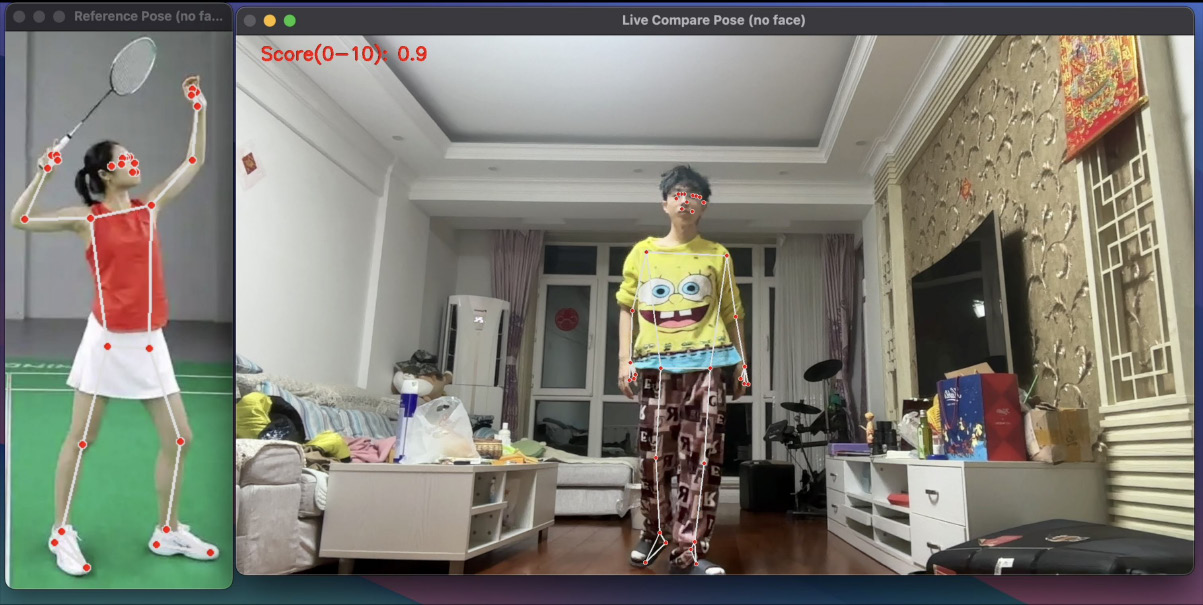
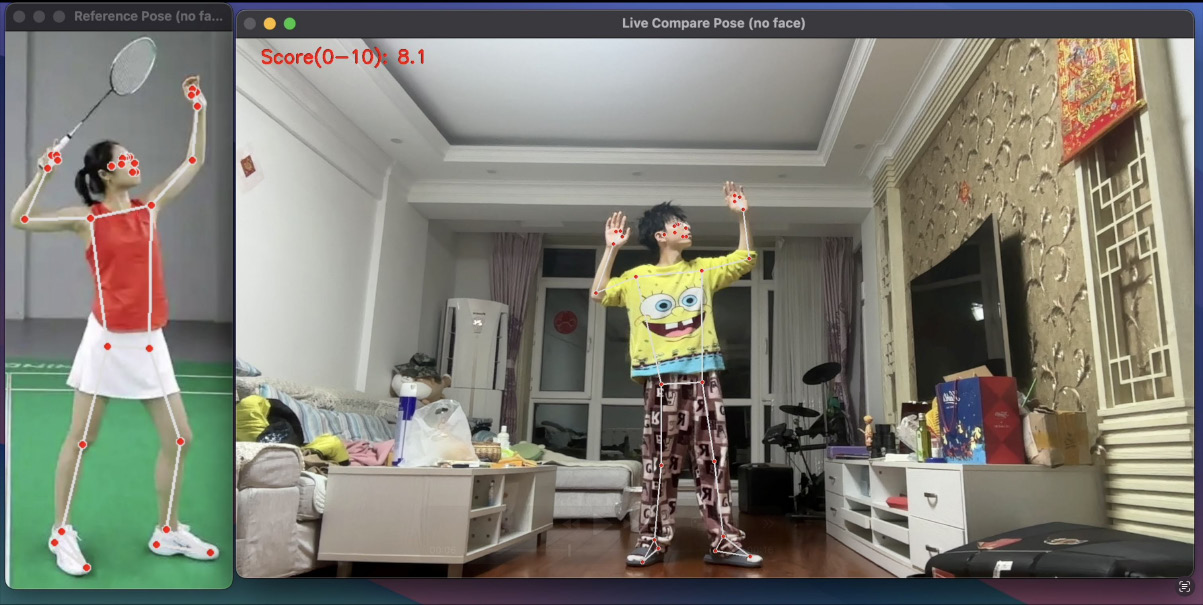
MediaPipe tracks hands, elbows, shoulders, torso, hips, knees and feet. The prototype compares relative landmark positions with a reference pose: an unprepared stance scored 0.9/10, while a closer overhead-ready pose scored 8.1/10.
THREE RECOGNITION CASES
Each case connects the sensing input, comparison rule and visible output so the current capability remains clear.
MODULE EVIDENCE
Each module below is supported by working hardware, software or interface evidence within the multimodal training experience.
A racket-mounted IMU module and pressure-sensing foot wearable define the intended multimodal product system.
The ESP32 reads MPU6050 motion signals through the working prototype and sends data by serial connection. Processed acceleration and rotation data estimate racket or foot movement trajectories.
The pressure-sensing insole outputs live pressure values and maps them into visual zones for movement and force-distribution feedback.
Unity Barracuda mirrors body-motion input on a 3D character, combining visible guidance, corrective feedback and repeatable game-based practice.
Recognize one predefined overhead-ready pose, identify a major mismatch, return a real-time 0–10 score, visualize movement and pressure feedback, and let the user retry.
Saved training history, expanded full-footwork coverage, personalized models, AI opponent and multiplayer competition.
Reference-pose scoring is sensitive to body proportions and camera angle; IMU position estimates can drift; and the four modules have not yet been validated as one synchronized system.
GAMEPLAY PROTOTYPES · SENSOR-ENABLED TRAINING
A video walkthrough of the interaction, sensing and game-based training experience, demonstrating how movement feedback supports corrective practice.
Watch on YouTube ↗The Bilibili edition provides the full prototype walkthrough through a playback option designed for viewers in mainland China.
Watch on Bilibili ↗A beginner-facing interface breaks preparation into front view, foot position and grip cues.
The training-mode prototype exposes frequency, speed and fitness controls for repeatable drills.
The game layer supports repeated targets and configurable practice scenarios for sustained skill development.
Guided corrective practice helps beginners understand foundational movements faster, improve their technique more efficiently and reduce injury risk by correcting unsafe movement habits early.
Expand the MediaPipe-to-Unity feedback loop with saved progress, personalized scoring thresholds and broader footwork coverage.